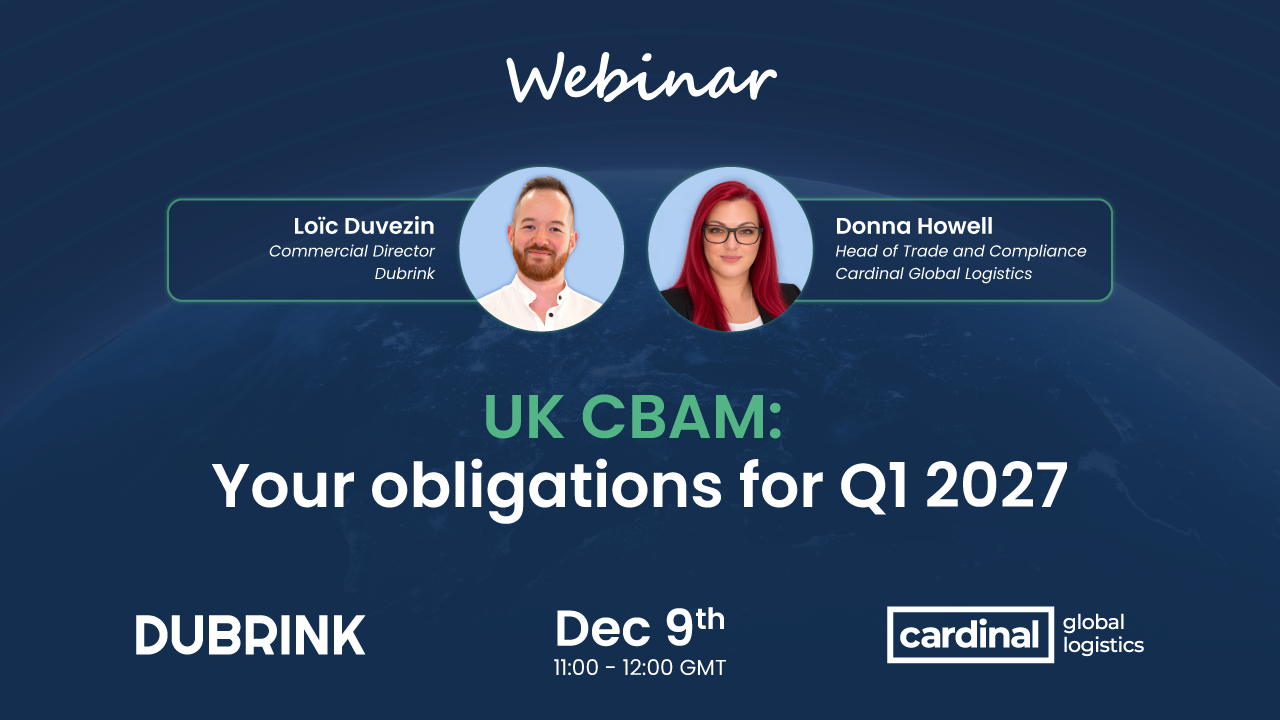

From 1 January 2027, the UK Carbon Border Adjustment Mechanism (CBAM) will introduce new carbon-related costs and compliance obligations for importers of certain iron and steel, aluminium, cement, fertiliser and hydrogen products.
Businesses importing covered goods need to understand whether they fall within the £50,000 registration threshold, how their potential CBAM liability is calculated, and what information they need from overseas suppliers.
Although the first annual CBAM return is due in 2028, relevant import and emissions data must be collected from the start of 2027.
Join Dubrink and Cardinal Global Logistics for a practical, one-hour webinar covering the regulatory requirements, financial implications and steps importers should take to prepare.
Our experts will explain the key differences between UK and EU CBAM and provide practical guidance on preparing your organisation for the new regime.
What we will cover:
Regulatory scope and core mechanics: A direct breakdown of covered sectors, commodity codes, and reporting thresholds to determine whether your imports fall within scope for UK CBAM. Although registration and the first return are not due until 2028, compliance requires capturing import and emissions data starting 1 January 2027.
Emissions calculations and supplier engagement: How embedded emissions liabilities are determined, the exact operational data required from non-UK manufacturers, and how to identify and address supplier data gaps before they affect CBAM reporting and cost calculations.
UK CBAM vs. EU CBAM: Crucial structural and timeline differences between both regimes, helping businesses already navigating the EU framework avoid duplicate work, incorrect assumptions, or misaligned filings.
Commercial and financial exposure: The direct link between fluctuating UK carbon prices, procurement timing, and margin protection, with practical methods to forecast liabilities, protect cash flow, and embed CBAM considerations into supplier agreements and customer pricing.
What you will take away
By joining this session, you will clearly identify whether your imported goods fall under UK CBAM starting January 2027, pinpoint the exact emissions data required from overseas manufacturers to resolve gaps early, and learn how to model financial exposure while aligning your customs, logistics, and finance teams well before formal registration opens in 2028.